Community and practical execution at Digital Adelaide 2026
Last updated: 19 August 2026
If Day 1 was all about stepping back and returning to core marketing fundamentals, Day 2 was about putting those principles into action.
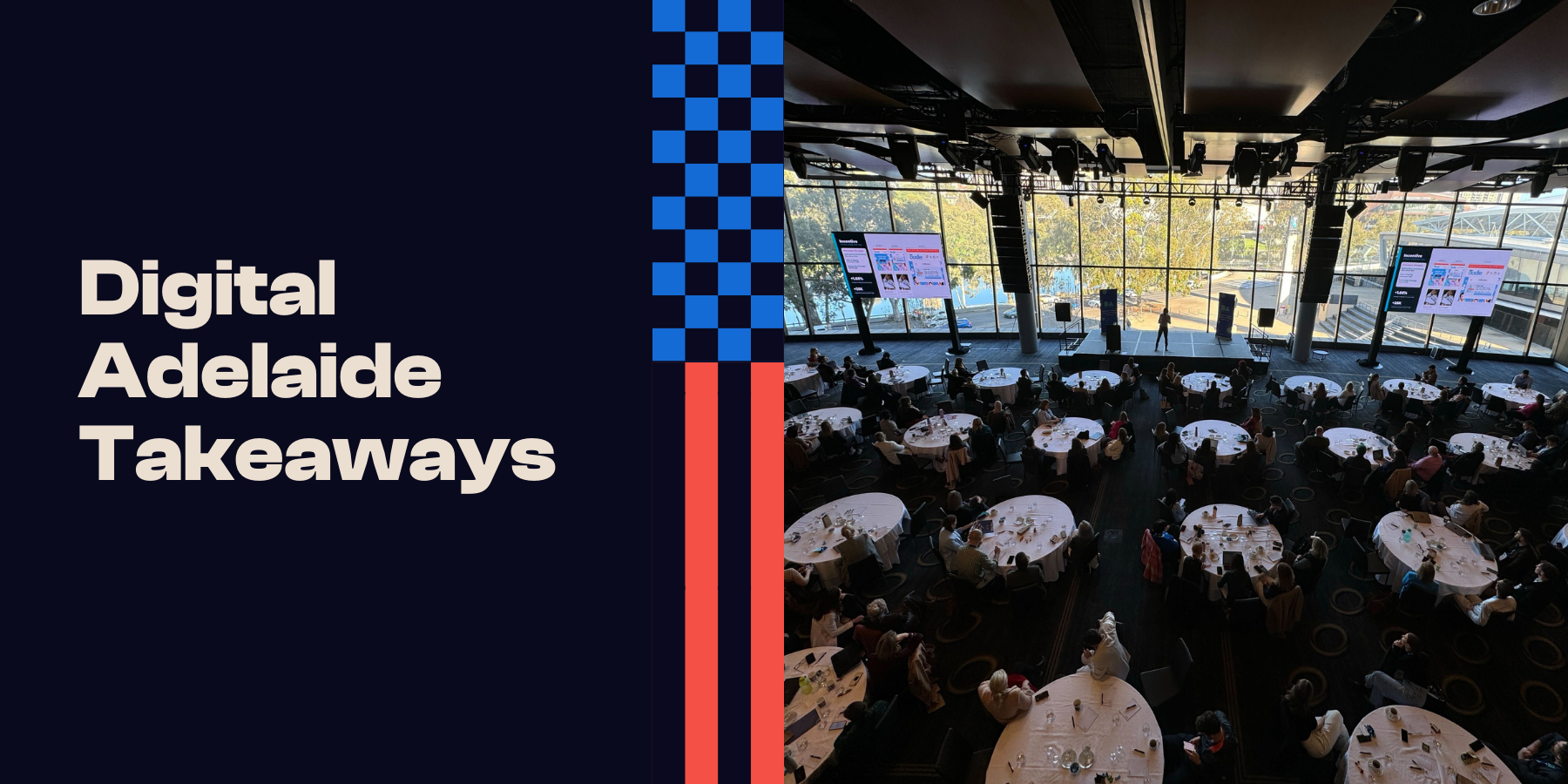
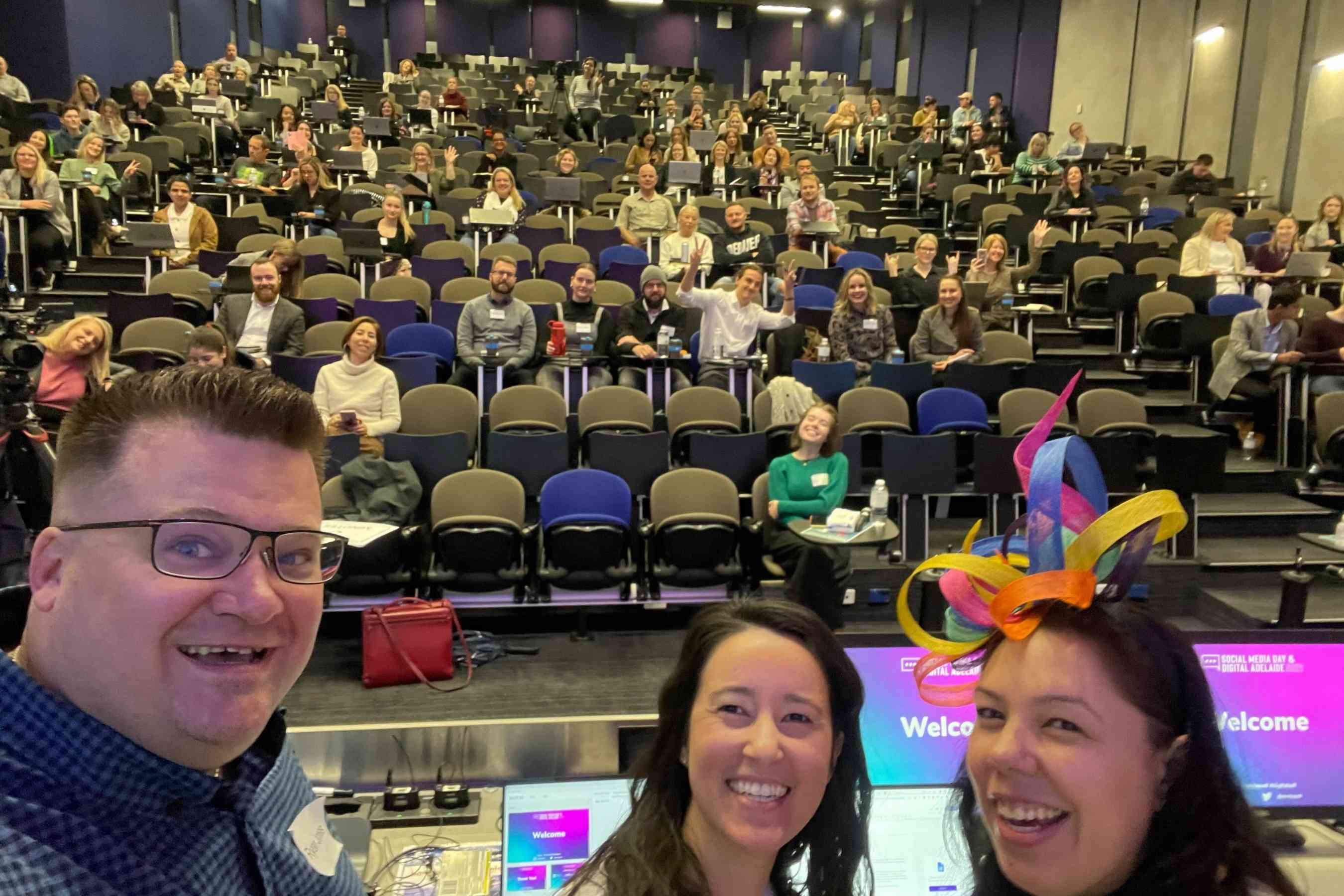
Attendees arrived on the final morning to a refreshed room setup. Unlike Day 1’s single stage keynote format, we kicked off together with an opening keynote, split into dedicated B2B and B2C streams throughout the day, and then brought everyone back into one room for the final keynote to close out the event.
Across both rooms, an overarching theme emerged for Day 2: modern execution relies on genuine community listening, unlearning vanity metrics, and building transparently.
Here is our recap of the single most interesting takeaway from each presentation on Day 2.
1. Ditching 1 million followers to build real community
Geena Lamb, Adelaide University
Following the Adelaide Uni merger, Geena Lamb’s team made the bold call. Instead of keeping, renaming, or trying to merge the old social media channels that already had a combined 1 million followers, her team made the deliberate decision to restart from absolute zero. The result? Total community engagement that actually exceeded both foundation units combined.
The key takeaway: Stop confusing follower counts with genuine community. Tailor content natively to each platform rather than copy and pasting website text onto social feeds, and ask yourself the ultimate acid test: "Would I follow our socials if I hadn't already heard of the company?"
2. Your community is telling you what to build
Steven Dent, SWEAT
Steven Dent demystified product roadmaps by showing that organisations don't need to guess what to create next, their community is already sending signals. By tracking repeating behaviours inside your product (like internal searches, drop-off points in user journeys, support questions, and creative customer workarounds), you can build features people actually want.
The key takeaway: Turn audience signals into product improvements using a continuous feedback loop: Signal Interpret Launch Share Back Reward. Remember that rewarding users doesn't always require free merch, offering beta access, public recognition, or feature highlights builds deep brand advocacy.
3. Navigating the 5 stage AI journey in sales enablement
Rubina Carlson, 90 Seconds
Rubina Carlson walked us through 90 Seconds' multi-stage roadmap to AI integration starting with a six month RevOps CRM rearchitecture to fix data drift before layering in AI. From deploying custom brand GPTs and Scout (their HubSpot Customer Agent) to building their custom sales enablement app, 90Labs, via Replit and Claude Code, her presentation grounded AI adoption in operational reality.
The key takeaway: AI integration isn't an overnight switch. It’s an iterative journey that requires continuous prompt refinement. When AI agents hallucinate or give wrong answers, use it as a signal to audit and overhaul your underlying data and knowledge base so your AI tools have accurate source material to draw from.
4. Intent mapping and the ROAS paradox
Kelly Dang, Refuel Creative
Evaluating ad performance strictly through immediate Return on Ad Spend (ROAS) can obscure true eCommerce growth. Kelly Dang highlighted the importance of understanding customer intent across different buying cycles, distinguishing between low-intent couch window shopping and high-intent mission buying (like Black Friday at midnight).
The key takeaway: Months like August and September are the critical times to invest in brand awareness. Introducing your business to prospective customers early warms up your audience before cost-per-click rates surge during peak end-of-year sales events.
5. Embracing loop marketing & answer engine optimisation
Ben Luks, Subnet
Traditional inbound blogging for SEO is shifting as search behavior moves toward AI overviews and conversational search tools like ChatGPT. Ben Luks shared how Subnet adopted HubSpot's new Loop Marketing framework (Express, Tailor, Amplify, Evolve) to pivot toward Answer Engine Optimization (AEO) and face-to-face educational events.
The key takeaway: As traditional SEO organic traffic declines across the web, shift strategy toward AEO to optimise for AI search recommendations, while refocusing human-led efforts on in-person educational events where real trust is built.
6. Documenting over creating: The build in public playbook
Lucy Bloomfield, Magic Marketer App
Lucy Bloomfield showed how documenting real world business decisions creates an attention grabbing narrative that keeps audiences coming back. Moving away from staged sets and complex shoots, this approach turns daily business milestones into authentic content.
The key takeaway: Treat building in public as ongoing documentation rather than traditional content creation. State a bold, measurable goal publicly, introduce recurring team members (characters), and transparently share the milestones, stakes, and behind-the-scenes realities along the way.
7. Humanising major infrastructure projects
Meenakshi Iyer, River Torrens to Darlington Project
Managing social media for South Australia’s largest infrastructure project, the River Torrens to Darlington project, requires engaging an audience with shrinking attention spans (averaging 40 seconds) while navigating complex stakeholder approvals and algorithm shifts toward private messaging.
The key takeaway: Build social license and community trust by humanizing complex projects. Highlight the engineers behind the machinery, translate technical disruption into everyday landmark reference points, and take viewers behind the safety barriers to show milestones firsthand.
8. Creating demand beyond click capture channels
Cate Meyer, CAASie
Channels like Google Search and Meta Ads excel at capturing existing demand, but they rarely generate new demand from buyers who aren't actively searching or ready to buy today. Relying solely on capture channels caps your overall growth potential.
The key takeaway: To build long term pipeline, identify and own at least one peripheral channel (such as niche industry platforms, thought leadership, or podcasts) that aligns with your audience's passive habits to create demand long before search intent begins.
9. Removing ego & sharing revenue targets
Sales & Marketing panel
The panel explored how sales and marketing can break down operational silos by removing ego and integrating into existing team structures, like marketers attending weekly sales meetings to see pipelines firsthand. By securing quick campaign wins early on, marketing builds the trust needed to invest in long term brand building and long sales cycle nurturing.
The key takeaway: Sales and marketing should share a single, unified revenue target rather than competing departmental quotas. When marketing stays involved throughout the entire sales funnel, nurturing long leads through events, account-based ads, and clear budget-to-target alignment, both teams win together.
10. Service as a growth engine: Lounge room to 250,000 orders
Kirsty Chapman-Smith, Partyrama Group
Closing out the conference, Kirsty Chapman-Smith shared her journey from reselling children's clothes on eBay to scaling a party supply business delivering over 250,000 orders annually built entirely on a foundation of exceptional customer service.
The key takeaway: Customer trust is the ultimate acquisition metric. Living by the operational principle of going "out of our way to make your day" for the Partyrama Group created genuine customer advocacy and word-of-mouth growth that paid ad campaigns simply couldn’t buy.
That's a wrap on Digital Adelaide 2026!
Day 2 proved that when you combine strong marketing fundamentals with active community listening, transparent execution, and genuine service, great growth naturally follows.
As a Gold sponsor and passionate attendees, the Refuel Creative pit crew walked away from Digital Adelaide 2026 inspired by where our industry is heading. Between returning to core human centric strategy on Day 1 and putting these practical, community first tactics into play on Day 2, we’ve returned to the office with full notebooks, fresh perspectives, and plenty of actionable ideas to put into practice for our clients.
If any of these takeaways sparked ideas for your own brand strategy or you want to chat about taking your digital marketing to the next level, reach out to the Refuel team. We’d love to help you put these insights into action!