Why we frequently ignore Google’s recommendations
Last updated: 08 May 2026
If you manage a Google Ads account, or even just glance at the Recommendations tab in your ad account, you are likely familiar with one of Google’s most misunderstood metrics. You log in, hoping to check on conversions or cost-per-click, but your eyes are immediately drawn to a giant, colourful gauge at the top of the screen.
The Google optimisation score.
It sits there, often hovering around 72%. It is usually displayed in a warning orange, implying urgent attention is needed. It tells you that your account is unoptimised and offers a seductive, one-click solution to get back to a perfect 100%. The gamification is powerful. Our brains are wired to want that perfect score.
It feels like a report card, and nobody wants to be getting a C grade on their marketing investment. That’s money left on the table.
But here is the uncomfortable truth that Google doesn’t put in the tooltips. It’s one that is critical for every business owner and marketer to understand. Chasing a 100% optimisation score is often the fastest way to burn through your ad budget.
The recommendations tab
Google presents the recommendations tab as a helpful, AI-driven assistant designed to spot opportunities you might have missed. In theory, it is a brilliant idea. It analyses your account history, campaign settings and search trends to generate a dynamic score (0% to 100%) that estimates how well your account is set up to perform.
On the surface, this sounds fantastic. Who wouldn't want sophisticated machine learning to help improve performance?
The problem lies in how Google defines performance, and more importantly, what the AI is incapable of knowing.
The algorithm operates in a vacuum of data. It sees click-through rates and search volume, but it does not know your profit margins. It doesn't know that your warehouse is out of stock on red widgets, or that your sales team is overwhelmed and can't handle low-quality leads. It views every potential click as a positive, regardless of the business context behind it.
Your ROAS vs Google's revenue
To understand why the optiscore is a trap, you have to look at the fundamental incentives at play. While Google is a partner in your growth (and at Refuel, we value our relationship as a Google Premier Partner highly), they are also a publicly traded company with a responsibility to their shareholders to sell ad inventory.
Your goal
You want to acquire customers as efficiently as possible. You care about return on ad spend (ROAS) and net profit. You want to spend $1 to make $5. If you can get the same number of sales for less money, that is a win.
Google's goal
Google wants to maximise reach and ad spend. They want to ensure that every available ad slot is filled. Their algorithm is incentivised to find ways for you to spend your daily budget in its entirety, regardless of whether that final 20% of spend actually resulted in profitable conversions.
In my 15 years working with Google Ads, I have seen this misalignment create a massive conflict of interest within the recommendations engine. The algorithm is structurally biased toward changes that increase the reach of your ads (broadening targeting) and the velocity of your spend (raising budgets), rather than the precision of your targeting.
Budget killers
If you blindly click apply all to reach that elusive 100% score, you aren't just optimising your account. You are often handing over strategic control to an automated system that prioritises volume over value. Here are the three most common budget-killers I see lurking in the recommendations tab:
Upgrade to broad match
This is Google’s favourite recommendation. You will see it constantly: Upgrade your existing keywords to broad match to capture more traffic. This is not an upgrade.
The pitch
Google claims their smart bidding is now advanced enough to understand context, so you don't need specific keywords anymore. They argue that by restricting match types, you are missing out on potential customers who search in unique ways.
The reality
While broad match has improved, it is still a loose interpretation of your intent.
We almost always find a significantly lower CPA on exact match terms, while broad match consistently drives the highest CPA.
If you sell luxury leather boots, a broad match keyword might decide that a user searching for "shoe repair near me" or "cheap faux leather workspace boots" is close enough. You pay for those clicks, but those users never convert.
At Refuel, we prefer phrase and exact match because they offer control. Broad match is often just a sophisticated way for Google to monetise low-quality search inventory that advertisers usually avoid.
Raise your budgets
You will frequently see a recommendation that says, Raise your daily budget to get 50 more clicks or Your campaigns are limited by budget.
The pitch
You are missing out on potential traffic because your budget cap is stopping your ads from showing later in the day.
The reality
In economics, this ignores the law of diminishing returns. Often, your current budget is capturing the lowest hanging fruit. That is, the high-intent, high-converting customers.
The extra traffic Google wants you to buy is usually more expensive and less likely to convert. If your campaigns are currently hitting their CPA (cost per acquisition) targets, raising the budget blindy often means your CPA goes up, and your profitability goes down.
Scaling spend should be a calculated, strategic decision based on cash flow and capacity, not an automated button press.
Expand to display network
For a standard search campaign, Google often suggests enabling the Google Display Network to get more impressions for unspent budget.
The pitch
Show your ads on news sites and blogs to people who might be interested in your service, extending your reach beyond just Google Search.
The reality
Search ads are text-based. When you push them onto the display network, they often look terrible. They become just blocks of text forced into visual spaces.
At Refuel, we want to be intentional about display advertising. If we are going to run display, we run designed and considered campaigns with proper creative assets that build your brand. We don't just let Google smear your text ads across low-quality websites.
Mixing these networks also dilutes your data and makes optimisation harder, but helps Google use your daily budget without necessarily increasing your performance.
The dangerous auto-apply setting
Perhaps the most dangerous feature of the modern Google Ads interface is the auto-apply setting. Google will often prompt you to automatically apply recommendations to keep your account optimised.
If enabled, this gives Google permission to change your keywords, increase your bids and alter your ad copy without you ever approving it. I have audited accounts where business owners were baffled as to why their spend doubled overnight, only to find that auto-apply had added hundreds of broad match keywords that were irrelevant to their business.
As a rule, we never leave this setting on. Your budget deserves human oversight.
Be warned, this is a favourite of those Google reps who give you a call and tell you to turn it on. You think because it’s Google calling you must be able to trust them, but they’re incentivised to get you to turn on auto apply, not to drive more campaign performance.
The expert take: Review, don't obey
It is important to note that the optimisation score isn't always wrong. We don't advocate for ignoring the tab completely. Google’s machine learning is powerful and it often catches genuine technical errors that a human might miss.
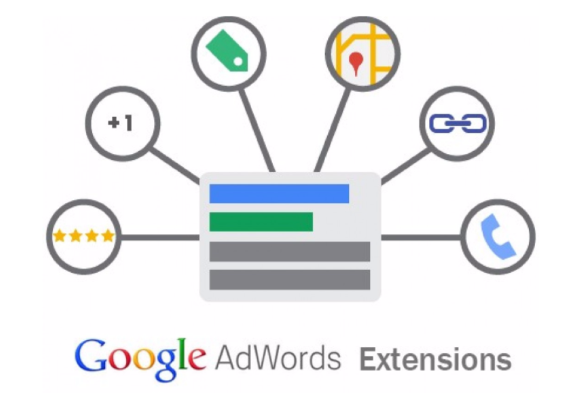
Sometimes it will flag conflicting negative keywords that are inadvertently blocking your best ads. It might suggest removing non-serving keywords that are cluttering your account, or identify that you are missing assets like site links or callouts. In these cases, the recommendations are helpful and should be applied.
The key is to make an educated decision.
We treat the recommendations tab as a list of ideas to be audited, not instructions to be followed. We look at every single suggestion. If a recommendation makes sense and aligns with your ROAS goals, we apply it. If it is a generic push for more spend, we dismiss it.
The weekly review cycle
We are a Google Premier Partner. That status isn't just a badge. It means we understand the platform deeply enough to know when to follow the rules and when to break them for your benefit.
We don't aim for a specific number, nor do we leave recommendations sitting there ignored. Instead, we aim for a clean slate.
On a weekly basis, we review every single recommendation in your account. We generally have three choices:
- Apply: If a recommendation helps your ROAS or CPA, we apply it.
- Dismiss: If it wastes budget (like broadly expanding keywords), we dismiss it.
- Adapt: Sometimes a recommendation sparks a good idea, but the implementation is wrong. We might see a suggestion to add new keywords, but instead of clicking Apply and letting Google add them as broad match, we will go into the campaign manually and add them as exact match. We then dismiss the recommendation in the tab because we have addressed the opportunity in a better way.
Here is the secret Google doesn't tell you. Dismissing a recommendation also increases your optimisation score.
So, if you log in on a Tuesday morning after our weekly review, you might actually see a 100% score. This doesn't mean we accepted Google's bad advice. It means we actively cleared the deck. However, Google’s algorithm is relentless. Within 24 to 48 hours, new recommendations will pop up, and the score will dip again.
This fluctuation is normal. It shows that we are actively managing the account, constantly filtering the signal from the noise, rather than just letting recommendations sit there gathering dust.
The verdict
Don't let the colour-coded gauge anxiety get to you. It is a psychological tool designed to nudge you toward higher spend and broader targeting.
A high optimisation score is vanity. High profitability is sanity. We will always choose to ignore a recommendation if it means protecting your bottom line. We use the recommendations tab as a source of ideas to be tested, not orders to be followed.
The next time you log in and see that score dip, remember: it likely means we are doing our job effectively by filtering out the noise and keeping your budget focused on high-intent, profitable growth.
Would you like us to audit your current optimisation score recommendations and tell you exactly which ones to dismiss and which to keep? Get in touch to see how we can help.